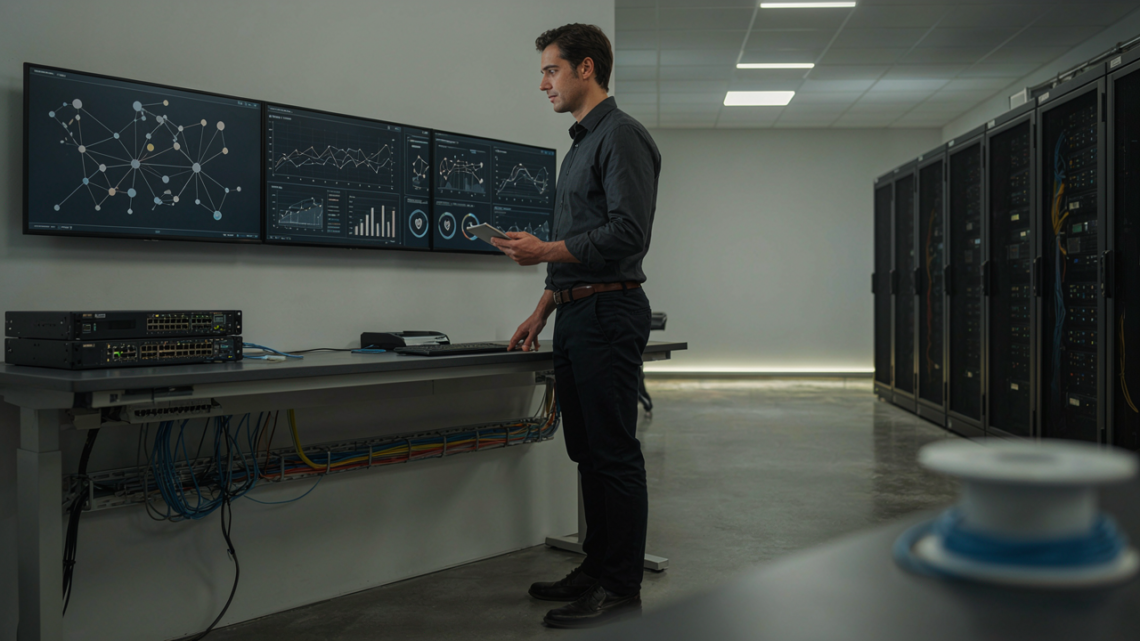
Modern workplaces depend on technology to communicate, collaborate, train employees, and serve customers. A well-designed commercial AV installation can bring these functions together through reliable displays, audio systems, video conferencing, digital signage, and control technology.
For businesses planning an upgrade, working with an experienced provider such as Instrata can help ensure that audiovisual technology is designed around the space and the people using it, rather than simply adding equipment where it fits.
Commercial AV is no longer limited to conference rooms. Organizations increasingly use audiovisual systems in boardrooms, classrooms, training facilities, retail environments, hospitality spaces, healthcare facilities, and corporate offices. The goal is not to install the most equipment possible. It is to create a technology environment that works consistently and supports business objectives.
What Is Commercial AV Installation?
Commercial AV installation involves the professional planning, deployment, configuration, and integration of audiovisual technology within a business environment.
A complete system may include:
- Commercial displays and video walls
- Projectors and projection screens
- Professional speakers and microphones
- Video conferencing equipment
- Digital signage
- Room control systems
- Audio distribution
- Wireless presentation systems
- Control interfaces
- Structured cabling and network connectivity
The installation process also involves more than mounting displays and connecting cables. Equipment must be positioned correctly, configured to communicate with other components, tested, and optimized for the intended application.
This distinction is important because even high-quality AV equipment can perform poorly when it is improperly selected, positioned, configured, or integrated.
Plan the AV System Around the Space
One of the most common mistakes businesses make is selecting equipment before determining how the space will actually be used.
A conference room designed for executive presentations has different requirements from a training room that accommodates dozens of participants. Likewise, a retail environment may prioritize digital signage and background audio while a corporate boardroom may require high-quality microphones and seamless video conferencing.
Before purchasing equipment, consider:
- Room size: Determine how far participants will be from displays, cameras, and speakers.
- Room purpose: Identify whether the space is primarily used for meetings, presentations, training, collaboration, entertainment, or customer interaction.
- User behavior: Consider who will operate the system and their level of technical experience.
- Lighting conditions: Evaluate natural and artificial lighting before selecting displays or projection systems.
- Acoustics: Identify potential sources of echo, background noise, and sound reflection.
- Future requirements: Allow room for technology upgrades and changes in business needs.
This planning stage can prevent expensive modifications later.
Choose Commercial AV Equipment for Performance
Equipment selection should be based on the requirements of the environment rather than specifications alone.
For example, a display with impressive resolution may not be the right choice if it is too small for the viewing distance. Similarly, powerful speakers do not automatically produce better audio if the room has significant reverberation or poor speaker placement.
A professional AV design considers how individual components work together.
Important considerations include:
- Display size and viewing distance
- Resolution and brightness
- Speaker coverage
- Microphone pickup patterns
- Camera positioning
- Connectivity requirements
- Control interfaces
- Equipment compatibility
- Reliability and serviceability
Commercial-grade equipment can also be better suited to environments where systems operate for extended periods or are used frequently throughout the day.
Integrate Video Conferencing Into the Workplace
Hybrid work has changed expectations for business communication. Employees and clients increasingly expect meetings to connect people in different locations without unnecessary technical complications.
A modern commercial AV installation can integrate cameras, microphones, speakers, displays, and conferencing platforms into a unified meeting environment.
The objective should be simple operation. Users should be able to enter a room, start a meeting, share content, and communicate with remote participants without spending several minutes troubleshooting connections.
Room design also affects the conferencing experience. Cameras should provide an appropriate view of participants, microphones should capture voices clearly, and speakers should distribute sound evenly throughout the room.
When these components are properly integrated, technology becomes less noticeable and communication becomes more natural.
Consider Audio as Carefully as Video
Businesses often focus heavily on displays while overlooking the importance of sound.
Poor audio can make an otherwise impressive AV system difficult to use. Echoes, excessive background noise, uneven volume, and microphone feedback can reduce meeting quality and make presentations frustrating.
Commercial audio systems should account for:
- Room dimensions
- Seating arrangements
- Ceiling height
- Wall and floor materials
- Ambient noise
- Speaker placement
- Microphone coverage
Acoustic treatment can also play an important role. In some spaces, reducing reverberation may improve speech intelligibility more effectively than simply installing more powerful speakers.
Good AV design therefore considers the room as an acoustic environment, not just a place to mount equipment.
Build a Reliable AV Control System
A system with numerous components can quickly become complicated if every device requires a separate remote or interface.
AV control systems can simplify operation by allowing users to manage multiple functions from a centralized interface. Depending on the installation, users may be able to control displays, projectors, lighting, audio levels, video sources, and room settings from one interface.
This is particularly valuable in meeting rooms and presentation spaces where employees need to focus on the meeting rather than the technology.
The best control interface is not necessarily the one with the most features. It is the one that makes common tasks straightforward and minimizes opportunities for user error.
Don’t Overlook Cabling and Network Infrastructure
Behind every dependable AV environment is an infrastructure that supports it.
Commercial audiovisual systems may rely on structured cabling, network connections, power distribution, and other infrastructure. Poor cable management can make maintenance more difficult and create unnecessary risks during future upgrades.
During installation, businesses should consider:
- Cable pathways
- Equipment rack organization
- Labeling
- Accessibility for maintenance
- Network capacity
- Power requirements
- Heat management
- Future expansion
Planning infrastructure for future requirements can reduce the cost and disruption associated with later technology upgrades.
Design for Scalability
Technology changes quickly, so businesses should avoid designing systems that only satisfy today’s requirements.
A scalable AV installation provides opportunities to add equipment, expand coverage, or integrate new technologies without replacing the entire system.
For example, an organization may initially need several video conferencing rooms but later expand its hybrid meeting capabilities across additional locations. A flexible infrastructure can make that transition easier.
Scalability can involve both physical infrastructure and system architecture. Sufficient cabling pathways, network resources, equipment capacity, and rack space can provide valuable flexibility.
Test and Commission the System
Installation should not end when the equipment is physically connected.
A professional commissioning process verifies that the system performs as intended under realistic operating conditions. This can include testing audio coverage, display performance, microphone pickup, video conferencing, control functions, connectivity, and user workflows.
Testing should also involve the people who will use the system regularly.
A technically functional system can still create problems if employees do not understand how to operate it. Basic user training and documentation can help organizations get more value from their investment.
Maintain the AV Environment
Even well-designed AV systems require ongoing attention.
Firmware updates, equipment inspections, cable checks, software changes, and component replacements can help maintain performance. Businesses should also monitor recurring problems instead of treating them as isolated incidents.
A maintenance strategy can help identify issues before they become major disruptions. This is especially important for meeting rooms, training facilities, customer-facing environments, and other spaces where AV downtime can affect productivity or revenue.
Businesses should maintain documentation covering equipment, connections, configurations, and service requirements. Accurate documentation can make troubleshooting and future upgrades significantly easier.
Turn AV Technology Into a Business Asset
The value of commercial AV is ultimately measured by what it enables people to accomplish.
A thoughtfully designed system can help teams collaborate more effectively, improve presentations, strengthen customer experiences, support remote communication, and make shared spaces easier to use.
The most effective installations are therefore not simply collections of advanced devices. They are integrated environments designed around specific business requirements.
Before beginning an AV project, businesses should identify the outcomes they want to achieve, evaluate how their spaces are used, and create a technology plan that can adapt as those requirements change.
Conclusion
A successful commercial AV installation combines thoughtful design, appropriate equipment, reliable infrastructure, intuitive controls, and ongoing maintenance. When these elements work together, audiovisual technology can become a practical part of everyday business operations rather than a source of technical frustration.
For organizations looking to create dependable, scalable, and user-friendly AV environments, Instrata provides a foundation for approaching audiovisual technology as an integrated business solution rather than a collection of individual devices.